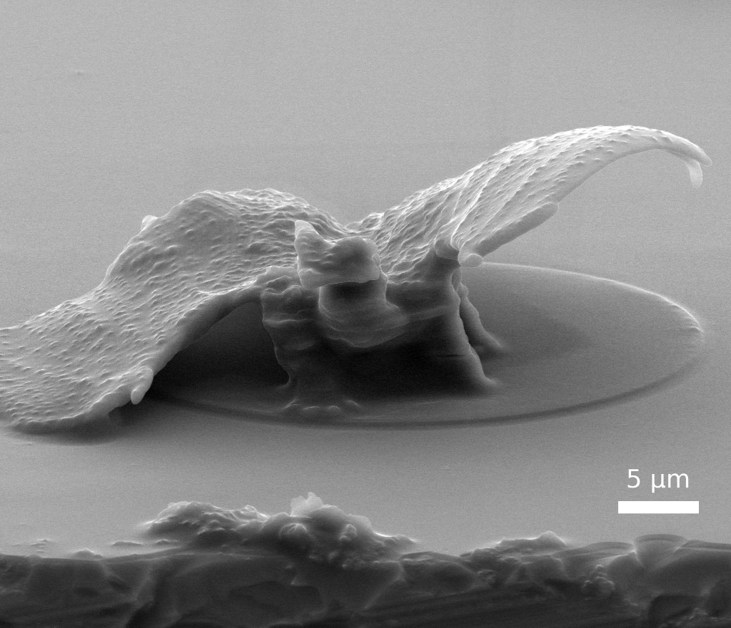
The technologies of the future—from quantum technology and medical devices to sensors and telecommunications—are placing ever-greater demands on how advanced components can be developed and manufactured. RisøLith is an innovation project aimed at further developing nanoscale 3D printing and creating new opportunities for research and development in a range of high-tech fields.
The project focuses on the development of an advanced cryostage—a temperature-controlled printing platform that is a central component of Copenhagen Microsystems’ upcoming Thor+ 3D printer. The goal is to develop a solution that enables 3D printing at the micro- and nanoscale using a much wider variety of base materials, thereby providing researchers with new opportunities to develop and study advanced materials and components.
New Possibilities for Nanoscale 3D Printing
The project involves the development of a new cryostage design with temperature control, a new cooling system, and software for machine control. At the same time, new processes and materials will be developed to expand the possibilities for nanoscale 3D printing.
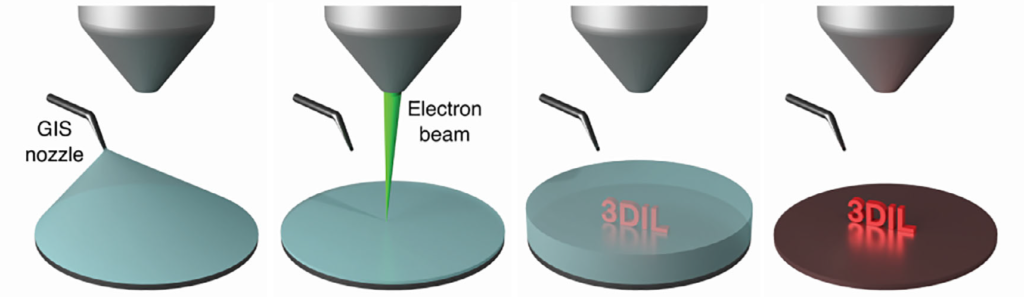
The goal is to develop a platform capable of operating at temperatures between 90 and 273 Kelvin and supporting both 3D printing and combining this with high-resolution electron microscopy. This will make it possible to develop and study advanced materials and components with high precision, while also generating new knowledge about materials for multi-material printing—a capability that has not yet been demonstrated with this technology.
Collaboration on the Next Generation of 3D Printing
The project is being carried out by Copenhagen Microsystems in collaboration with DTU Construct and DTU Risø.
Copenhagen Microsystems is developing hardware and software, while DTU is working on the development and testing of new materials using the Thor+ demonstrator. Overall, the project aims to develop instruments, control systems, processes, and materials that can serve as the foundation for the further development of Thor+ and future products.
Building on Research from Risø
RisøLith builds on research associated with Risø since 2014. The first hardware for DTU’s 3D ice lithography technology was developed in DTU Risø’s mechanical workshops, and the project continues the long-standing collaboration between Copenhagen Microsystems and DTU.
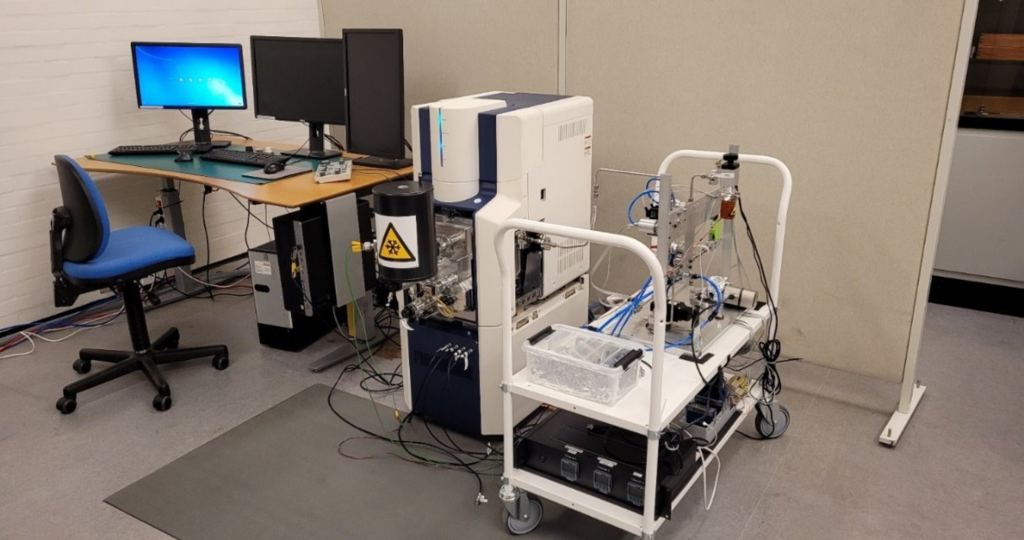
The project is being carried out through activities at Risø, where researchers and workshops are contributing to the development and refinement of the technology. The experience gained from the project can serve as the basis for the further development of Thor+ and future products.
Part of the Risø SME Innovation Platform
The project is one of 15 innovation projects within the Risø SME Innovation Platform, where companies and research institutions collaborate to develop and demonstrate new green technologies. The platform provides companies with access to research expertise, testing facilities, and strong innovation partnerships based at Risø.
Explore the other projects on the innovation platform
- PFASOL – PFAS in solar power plants – mapping and documentation of PFAS in solar power plants.
- OmniPFAS – flexible solutions for removing PFAS from various types of water.
- KhaosGuard – continuous monitoring of nitrous oxide emissions from wastewater treatment plants.
- RisøLith – 3D printing at the nanoscale at low temperatures.
- Circular solar-powered lighting – off-grid lighting with a focus on circularity and dark-sky principles.
- Heat-driven water-based cooling technology – utilization of excess heat for energy-efficient cooling.
- Reliable water supply – mobile solutions for producing safe drinking water.
- Searine M360 – electric propulsion system for small boats.
- Chemical plastic recycling – conversion of plastic waste into methanol.
- NanoShield – UV and nanotechnology that inhibits bacterial and algal growth on metal surfaces.
- Lab2Land – Greenlandic rock flour for carbon sequestration and soil improvement.
- 3D printing for flood protection – nature-based barriers printed directly into the landscape.
- Recycled Wind Turbines for 3D-Printed Homes – fiberglass from end-of-life wind turbines as a building material.
- Circular Plastic without Permanence – biodegradable plastic made from brewery waste.
- Circular Battery Design – battery systems designed for disassembly, repair, and reuse.
The project is part of the Risø SME Innovation Platform, which was developed as a coordinated initiative under the Investment Support Scheme for Green Innovative Technologies and is administered by Clean. The initiative is funded by REACT-EU funds administered by the Danish Board of Business Development.