Bacteria on implants can lead to infections, while algae growth on ship hulls can increase drag in the water and thus fuel consumption. These challenges arise in widely different environments but have one thing in common: unwanted biological growth on metal surfaces.
NanoShield is an innovation project aimed at developing UV and nanotechnologies to reduce the growth of bacteria and algae on metal surfaces. The project focuses on applications in the fields of implants and shipping and investigates how UV light and nanostructured surfaces can help reduce infections and algae growth.
Metal surfaces that inhibit the growth of bacteria and algae
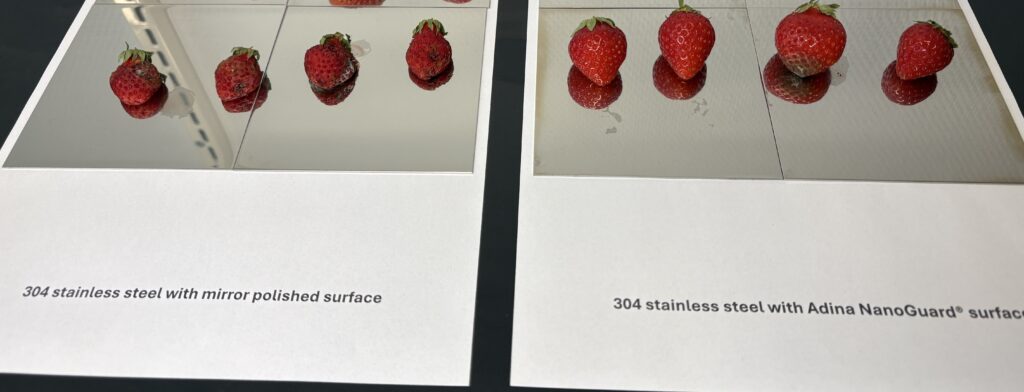
The project aims to develop nanostructured surfaces made of titanium, zirconium, and stainless steel. The nanostructure is formed directly within the metal, so no other materials are added to the surface.
The goal is to investigate how the structure of these surfaces can reduce the growth of bacteria or algae. In the healthcare sector, the technology will be tested with a view to preventing infections around implants. In the shipping industry, it will be investigated as a method for limiting algae growth on ship hulls.
UV Light for Implants and Underwater Drones
The project will also develop two types of UV-LED technology. For implants, the team is working on a micro-LED solution in which the UV light source can be placed inside the implant. For maritime applications, larger UV-LED systems are being developed for use with underwater drones.
Various wavelengths within the UVA, UVB, and UVC ranges will be tested to investigate their effect on bacteria and algae. The project will also test the nanostructured metal surfaces and UV technologies to establish a better foundation for the further development of these solutions.
Development and Testing at Risø
The project is being carried out by Adina Technologies in collaboration with DTU Electro.
The work involves the design and fabrication of nanostructured metal surfaces, the development of micro- and macro-UV technologies, and testing their effect on bacterial and algal growth.
The project is being carried out at Risø, where the partners have access to Green Photonics laboratories and facilities for testing with underwater drones. The technologies developed will be tested in Roskilde Fjord, among other locations. Researchers from Risø are contributing their expertise in UV-LED technology, nanotechnology, bacteria, and algae growth.
Part of the Risø SME Innovation Platform
The project is one of 15 innovation projects within the Risø SME Innovation Platform, where companies and research institutions collaborate to develop and demonstrate new green technologies. The platform provides companies with access to research expertise, testing facilities, and strong innovation partnerships based at Risø.
Explore the other projects on the innovation platform
- PFASOL – PFAS in solar power plants – mapping and documentation of PFAS in solar power plants.
- OmniPFAS – flexible solutions for removing PFAS from various types of water.
- KhaosGuard – continuous monitoring of nitrous oxide emissions from wastewater treatment plants.
- RisøLith – 3D printing at the nanoscale at low temperatures.
- Circular solar-powered lighting – off-grid lighting with a focus on circularity and dark-sky principles.
- Heat-driven water-based cooling technology – utilization of excess heat for energy-efficient cooling.
- Reliable water supply – mobile solutions for producing safe drinking water.
- Searine M360 – electric propulsion system for small boats.
- Chemical plastic recycling – conversion of plastic waste into methanol.
- NanoShield – UV and nanotechnology that inhibits bacterial and algal growth on metal surfaces.
- Lab2Land – Greenlandic rock flour for carbon sequestration and soil improvement.
- 3D printing for flood protection – nature-based barriers printed directly into the landscape.
- Recycled Wind Turbines for 3D-Printed Homes – fiberglass from end-of-life wind turbines as a building material.
- Circular Plastic without Permanence – biodegradable plastic made from brewery waste.
- Circular Battery Design – battery systems designed for disassembly, repair, and reuse.
The project is part of the Risø SME Innovation Platform, which was developed as a coordinated initiative under the Investment Support Scheme for Green Innovative Technologies and is administered by Clean. The initiative is funded by REACT-EU funds administered by the Danish Board of Business Development.