Bioplastics are increasingly being used as an alternative to traditional plastics. Few bioplastic materials are made from renewable raw materials, and they rarely degrade naturally in the real world if they end up in the environment.
At the same time, large quantities of organic byproducts are generated by the food industry, which are currently utilized only to a limited extent. Utilizing these byproducts to produce plastic can represent a higher value-added step than, for example, converting them into energy, thereby achieving better cascade utilization—a key goal of the future bioeconomy.
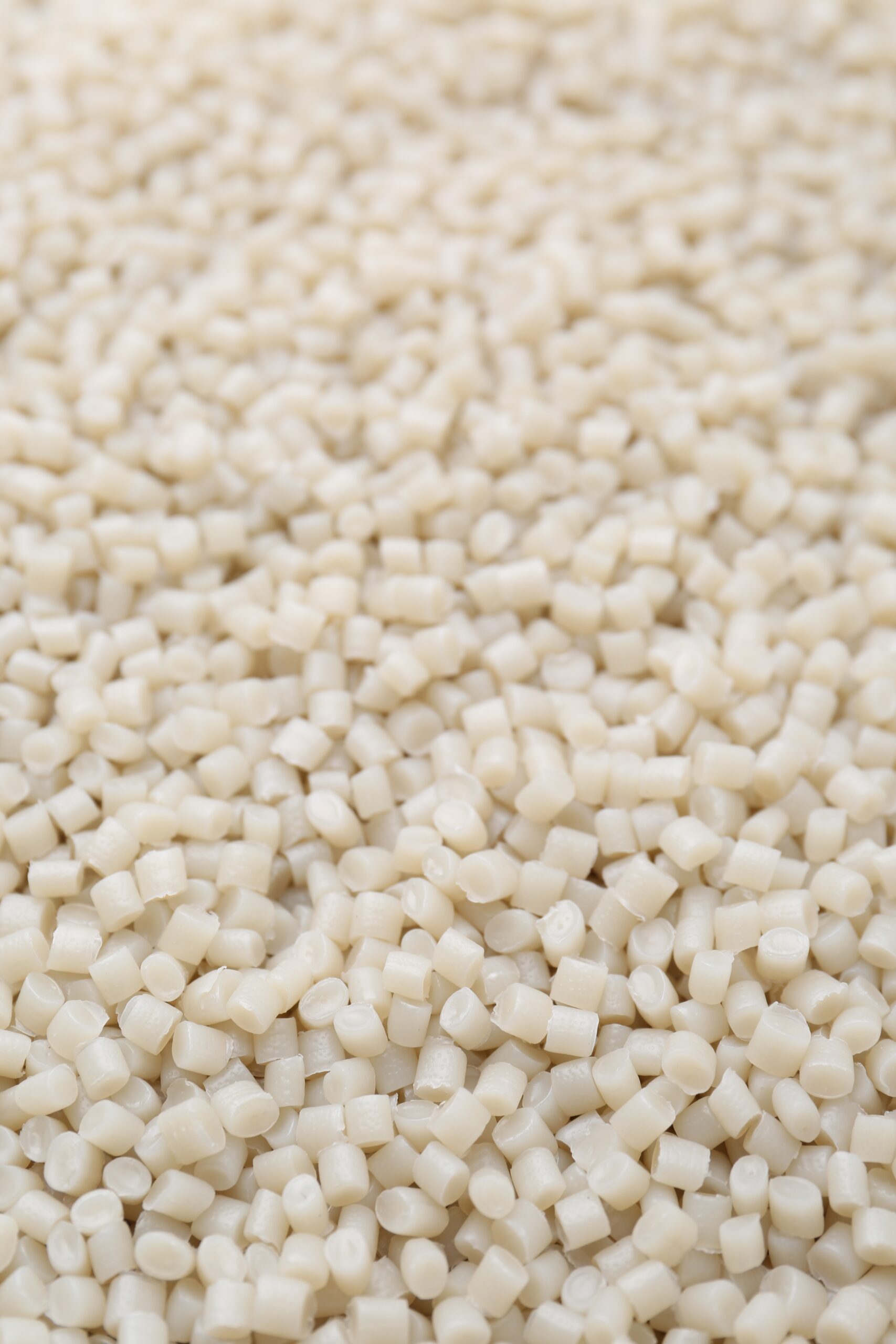
Circular Plastic without Permanence is an innovation project aimed at developing a new type of biodegradable plastic made from residual fibers from breweries. The project builds on Residue Labs’ work with circular PLA and investigates how residual biomass can be converted into PHA types—a type of plastic that degrades naturally in the environment. The goal is to develop a circular engineering bioplastic material that can be used for applications such as 3D printing and the manufacture of engineering plastic components.
From brewery waste to biodegradable plastic
The project aims to develop a production process in which residual fibers from breweries are converted into sugars, which are then used to produce various types of PHA through fermentation.
The work involves developing and optimizing the entire process—from enzymatic degradation of the biomass and fermentation to the extraction and separation of PHA, as well as further processing so that the material can be used directly in existing plastic production. The goal is to develop and document a process that can serve as the basis for the further maturation of the technology.
From the Lab to a New Plastic Material
The project is being carried out by Residue Labs ApS in collaboration with Roskilde University (RUC).
As part of the project, PHA is being produced on a small scale so that production, material quality, and processing can be studied and documented. At the same time, the production process is being optimized to lay the groundwork for further development toward pilot production.
Among other things, the developed plastic will be evaluated for applications such as 3D printing and technical plastic components, where its naturally inherent biodegradability could be a key property in the future.
Development Based at Risø
RUC analyzes samples from the various process steps using advanced chemical analysis methods, particularly NMR spectroscopy and mass spectrometry.
Among other things, the analyses reveal which simple sugars, poorly soluble molecules, and biomass residues remain after enzyme treatment.
This knowledge provides Residue Labs with concrete feedback for improving the process. At the same time, RUC is developing new insights into how these analytical methods can be used to optimize industrial enzyme and fermentation processes.
The collaboration thus combines the company’s materials and process knowledge with RUC’s research expertise and laboratory facilities.
The collaboration with the Risø area’s knowledge and innovation environments, represented by Roskilde University, gives the project access to research expertise and laboratory facilities that are essential for the development and validation of the new type of plastic.
Part of the Risø SME Innovation Platform
The project is one of 15 innovation projects within the Risø SME Innovation Platform, where companies and research institutions collaborate to develop and demonstrate new green technologies. The platform provides companies with access to research expertise, testing facilities, and strong innovation partnerships based at Risø.
Explore the other projects on the innovation platform
- PFASOL – PFAS in solar power plants – mapping and documentation of PFAS in solar power plants.
- OmniPFAS – flexible solutions for removing PFAS from various types of water.
- KhaosGuard – continuous monitoring of nitrous oxide emissions from wastewater treatment plants.
- RisøLith – 3D printing at the nanoscale at low temperatures.
- Circular solar-powered lighting – off-grid lighting with a focus on circularity and dark-sky principles.
- Heat-driven water-based cooling technology – utilization of excess heat for energy-efficient cooling.
- Reliable water supply – mobile solutions for producing safe drinking water.
- Searine M360 – electric propulsion system for small boats.
- Chemical plastic recycling – conversion of plastic waste into methanol.
- NanoShield – UV and nanotechnology that inhibits bacterial and algal growth on metal surfaces.
- Lab2Land – Greenlandic rock flour for carbon sequestration and soil improvement.
- 3D printing for flood protection – nature-based barriers printed directly into the landscape.
- Recycled Wind Turbines for 3D-Printed Homes – fiberglass from end-of-life wind turbines as a building material.
- Circular Plastic without Permanence – biodegradable plastic made from brewery waste.
- Circular Battery Design – battery systems designed for disassembly, repair, and reuse.
The project is part of the Risø SME Innovation Platform, which was developed as a coordinated initiative under the Investment Support Scheme for Green Innovative Technologies and is administered by Clean. The initiative is funded by REACT-EU funds administered by the Danish Board of Business Development