Access to clean drinking water is taken for granted in Denmark—but climate change, extreme weather, and a changing threat landscape are placing new demands on how we secure the water supply when the normal infrastructure is challenged. There is a need for solutions that can quickly deliver safe drinking water, no matter where the need arises.
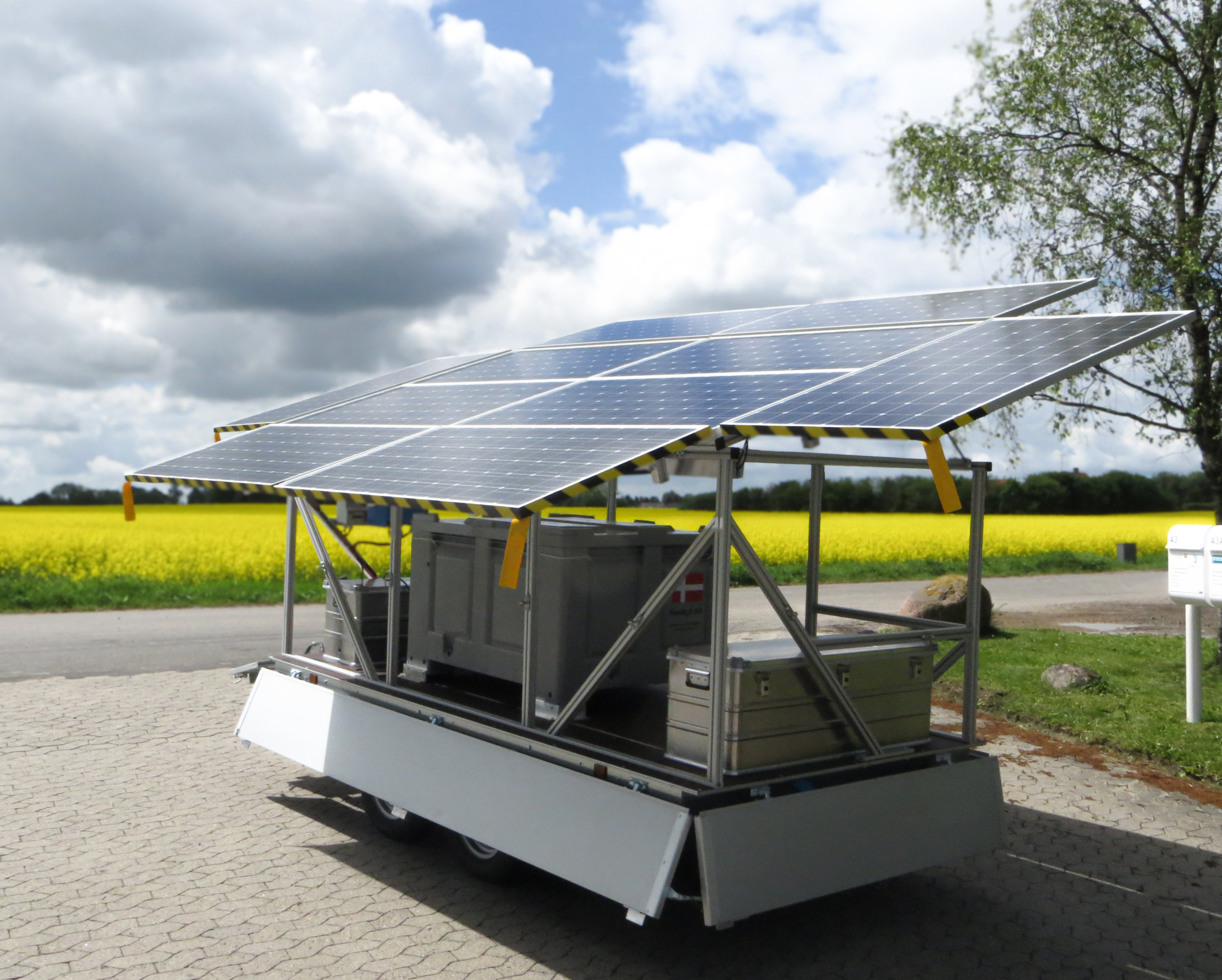
Robust Water Supply is an innovation project aimed at developing a mobile and scalable water purification system for producing safe drinking water. The solution combines established water purification technologies with new UV-LED systems and integrated energy solutions, enabling the system to operate both with and without access to the power grid. The goal is to develop a compact solution that is easy to transport, operate, and maintain.
Clean drinking water—even when the infrastructure fails
The project is developing an integrated system in which water purification, energy supply, and distribution are conceived as a single solution. The system must be capable of purifying fresh, brackish, and saltwater, while also being easy to repair and maintain without the use of special tools.
As part of the project, new UV-LED solutions for water disinfection, energy-efficient pump and membrane systems, and compact energy solutions for both on-grid and off-grid operation are being developed and tested. The goal is to develop a flexible solution that can be adapted to different needs and used under varying conditions.
Developed for practical use
The project is being carried out by MuchMoreWater A/S in collaboration with DTU Electro and Ellegaard InduMove A/S.
The project involves the development, testing, and documentation of the overall solutions. The systems will be tested under realistic conditions with a focus on operational reliability, mobility, energy consumption, and user-friendliness. At the same time, technical and economic documentation will be prepared to serve as the basis for the further development and application of the technology.
The solution is targeted at, among others, emergency response teams, defense organizations, and humanitarian organizations where there is a need to quickly establish a safe drinking water supply.
Collaboration with DTU and Risø
The project is being carried out through activities at Risø, where MuchMoreWater and DTU Electro are collaborating on the development and testing of, among other things, UV-LED technology, energy systems, and the overall integration of water treatment and energy supply.
DTU Electro is contributing to the development and optimization of UV-LED solutions for water disinfection, while the testing facilities at Risø provide the setting for testing and documenting the complete systems.
Part of the Risø SME Innovation Platform
The project is one of 15 innovation projects within the Risø SME Innovation Platform, where companies and research institutions collaborate to develop and demonstrate new green technologies. The platform provides companies with access to research expertise, testing facilities, and strong innovation partnerships based at Risø.
Explore the other projects on the innovation platform
- PFASOL – PFAS in solar power plants – mapping and documentation of PFAS in solar power plants.
- OmniPFAS – flexible solutions for removing PFAS from various types of water.
- KhaosGuard – continuous monitoring of nitrous oxide emissions from wastewater treatment plants.
- RisøLith – 3D printing at the nanoscale at low temperatures.
- Circular solar-powered lighting – off-grid lighting with a focus on circularity and dark-sky principles.
- Heat-driven water-based cooling technology – utilization of excess heat for energy-efficient cooling.
- Reliable water supply – mobile solutions for producing safe drinking water.
- Searine M360 – electric propulsion system for small boats.
- Chemical plastic recycling – conversion of plastic waste into methanol.
- NanoShield – UV and nanotechnology that inhibits bacterial and algal growth on metal surfaces.
- Lab2Land – Greenlandic rock flour for carbon sequestration and soil improvement.
- 3D printing for flood protection – nature-based barriers printed directly into the landscape.
- Recycled Wind Turbines for 3D-Printed Homes – fiberglass from end-of-life wind turbines as a building material.
- Circular Plastic without Permanence – biodegradable plastic made from brewery waste.
- Circular Battery Design – battery systems designed for disassembly, repair, and reuse.
The project is part of the Risø SME Innovation Platform, which was developed as a coordinated initiative under the Investment Support Scheme for Green Innovative Technologies and is administered by Clean. The initiative is funded by REACT-EU funds administered by the Danish Board of Business Development