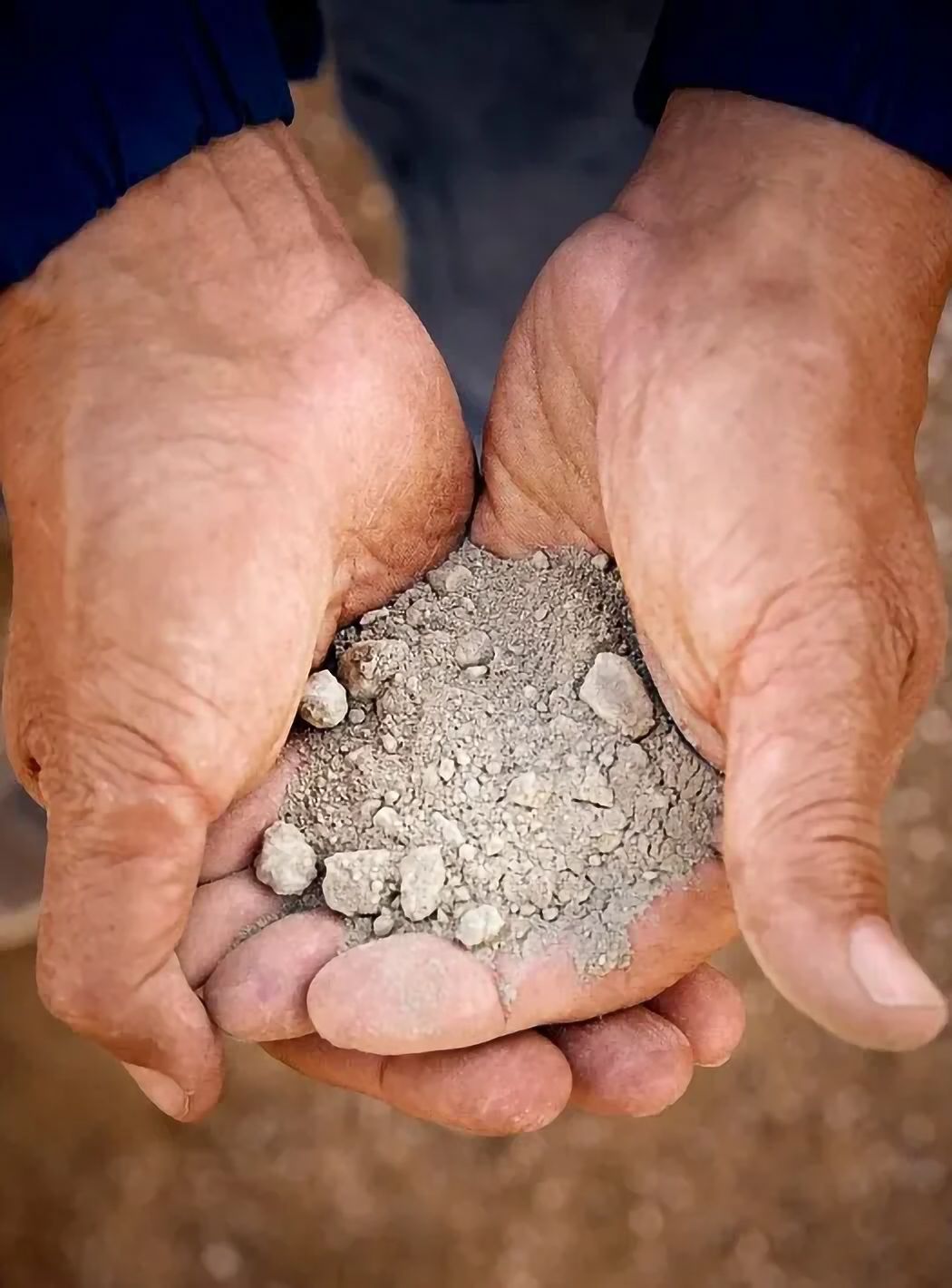
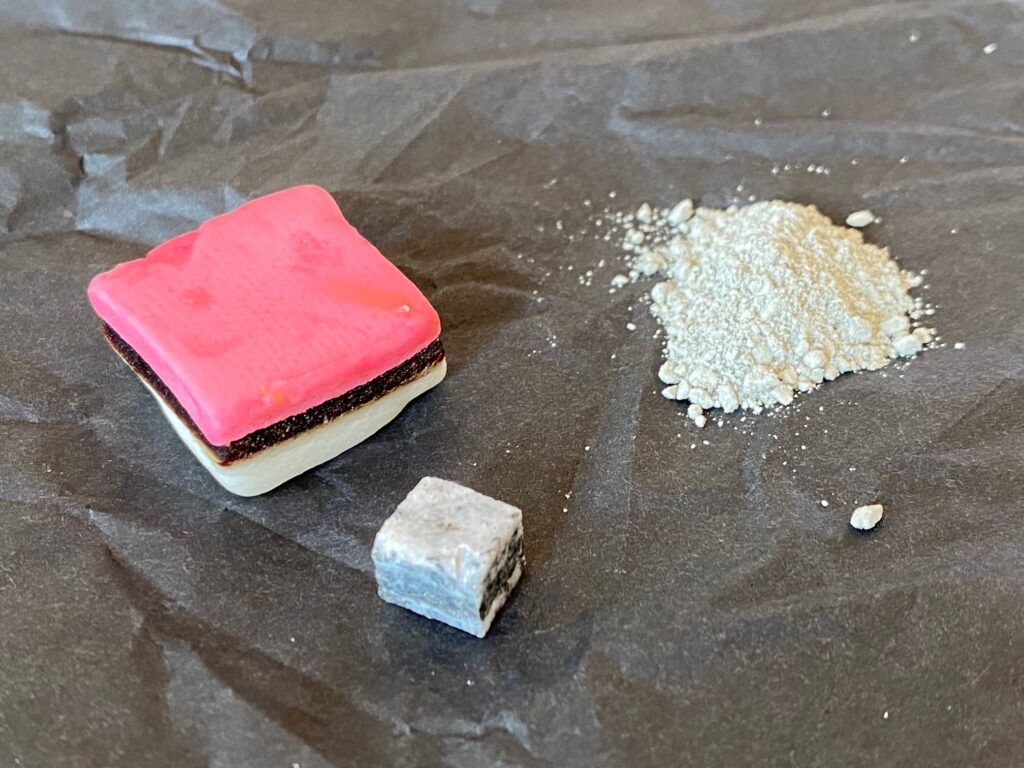
Greenlandic rock flour has the potential to improve soil health while capturing and storing CO₂. Before it can be used on a larger scale, however, more knowledge is needed about both its performance in agricultural soils and how the raw material can be processed into a product suitable for practical use in farming.
Lab2Land is an innovation project that will establish a research and development hub at Risø to support the commercialisation of Greenlandic Rock Flour (GRF). The project combines greenhouse and field trials with the development of industrial processing methods. It also tests a new way of integrating rock flour into existing agricultural flows, by mixing it into animal slurry and passing it through a biogas digester. Together, these activities will document the material’s agronomic performance and carbon sequestration potential while supporting the development of a commercially viable agricultural product.
From raw material to an agricultural product
The project has two main objectives. The first is to build scientific evidence of how Greenlandic rock flour affects crop performance and contributes to carbon sequestration. The second is to develop and validate the industrial processes needed to convert the raw material into a consistent, transportable product suitable for agricultural use.
The work includes developing and testing processing steps such as separation, filtration and drying. The aim is to define and validate the processing methods required to move from experimental batches to industrial-scale production.
Integrating rock flour into existing farm operations
Alongside direct application of rock flour to the soil, the project will test a new way of integrating the material into existing agricultural flows. In this route the rock flour is mixed into animal slurry, which then passes through a biogas digester before the digestate is spread on the field. The aim is to establish whether farmers can handle rock flour using the storage, mixing and spreading equipment already present on the farm, rather than as a separate field operation.
DTU will study the effect of rock flour in the biogas digester, including its influence on the anaerobic digestion process, biogas yield and the composition of the digestate. This part of the work is exploratory. The mechanisms are not yet established, and a central objective is to document whether the material is neutral, beneficial or detrimental to digester performance and to the fertiliser value of the digestate.
From greenhouse trials to field testing
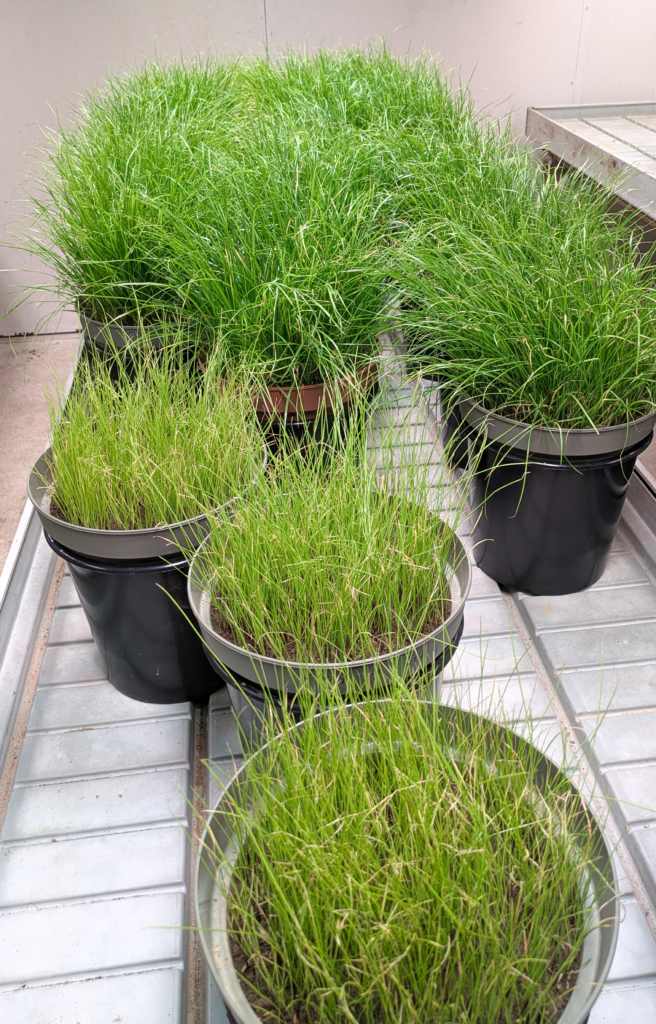
The project begins with controlled greenhouse pot trials, where different processed forms of the material can be evaluated under controlled conditions. These trials will be followed by field testing in Zealand to document how the material performs under practical farming conditions.
Together, the greenhouse and field trials will provide data on both agronomic performance and carbon sequestration while supporting the validation of the processing methods needed for large-scale production.
Collaboration across research, agriculture and engineering
The project is carried out by Rock Flour Company in collaboration with Agrolab and DTU.
Agrolab will conduct the field trials in the Kalundborg area, while DTU will study the effect of rock flour in the biogas digester. Rock Flour Company will establish the project’s R&D hub at Risø, bringing together product development, testing and process optimisation.
Locating the R&D hub at Risø provides access to research expertise and specialised test facilities while creating a long-term base for the company’s product development activities. The field trials will be carried out in collaboration with local farmers across Zealand.
Part of the Risø SME Innovation Platform
The project is one of 15 innovation projects within the Risø SME Innovation Platform, where companies and research institutions collaborate to develop and demonstrate new green technologies. The platform provides companies with access to research expertise, testing facilities, and strong innovation partnerships based at Risø.
Explore the other projects on the innovation platform
- PFASOL – PFAS in solar power plants – mapping and documentation of PFAS in solar power plants.
- OmniPFAS – flexible solutions for removing PFAS from various types of water.
- KhaosGuard – continuous monitoring of nitrous oxide emissions from wastewater treatment plants.
- RisøLith – 3D printing at the nanoscale at low temperatures.
- Circular solar-powered lighting – off-grid lighting with a focus on circularity and dark-sky principles.
- Heat-driven water-based cooling technology – utilization of excess heat for energy-efficient cooling.
- Reliable water supply – mobile solutions for producing safe drinking water.
- Searine M360 – electric propulsion system for small boats.
- Chemical plastic recycling – conversion of plastic waste into methanol.
- NanoShield – UV and nanotechnology that inhibits bacterial and algal growth on metal surfaces.
- Lab2Land – Greenlandic rock flour for carbon sequestration and soil improvement.
- 3D printing for flood protection – nature-based barriers printed directly into the landscape.
- Recycled Wind Turbines for 3D-Printed Homes – fiberglass from end-of-life wind turbines as a building material.
- Circular Plastic without Permanence – biodegradable plastic made from brewery waste.
- Circular Battery Design – battery systems designed for disassembly, repair, and reuse.
The project is part of the Risø SME Innovation Platform, which was developed as a coordinated initiative under the Investment Support Scheme for Green Innovative Technologies and is administered by Clean. The initiative is funded by REACT-EU funds administered by the Danish Board of Business Development