The construction and civil engineering industry accounts for about 41 percent of the total waste volume in Denmark. This means that every year, large amounts of resources go to waste.
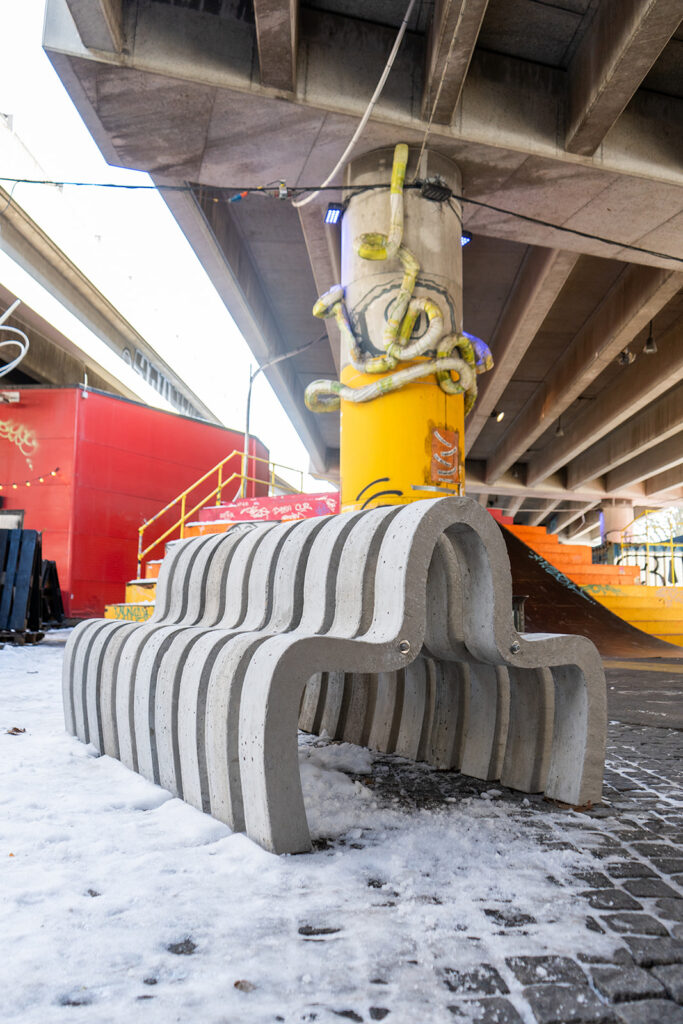
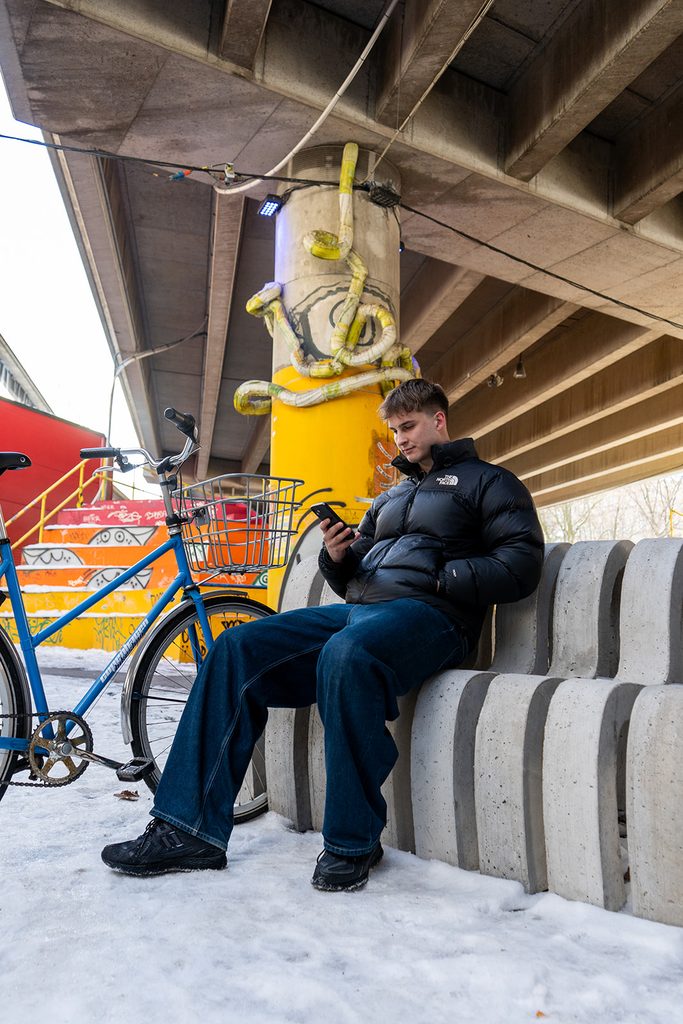
Surely there must be a way to repurpose that. That was the vision of the startup KONKRET, the company behind ARC-RACK, a multifunctional piece of urban furniture that serves as both a bike rack and a bench and is made from recycled concrete.
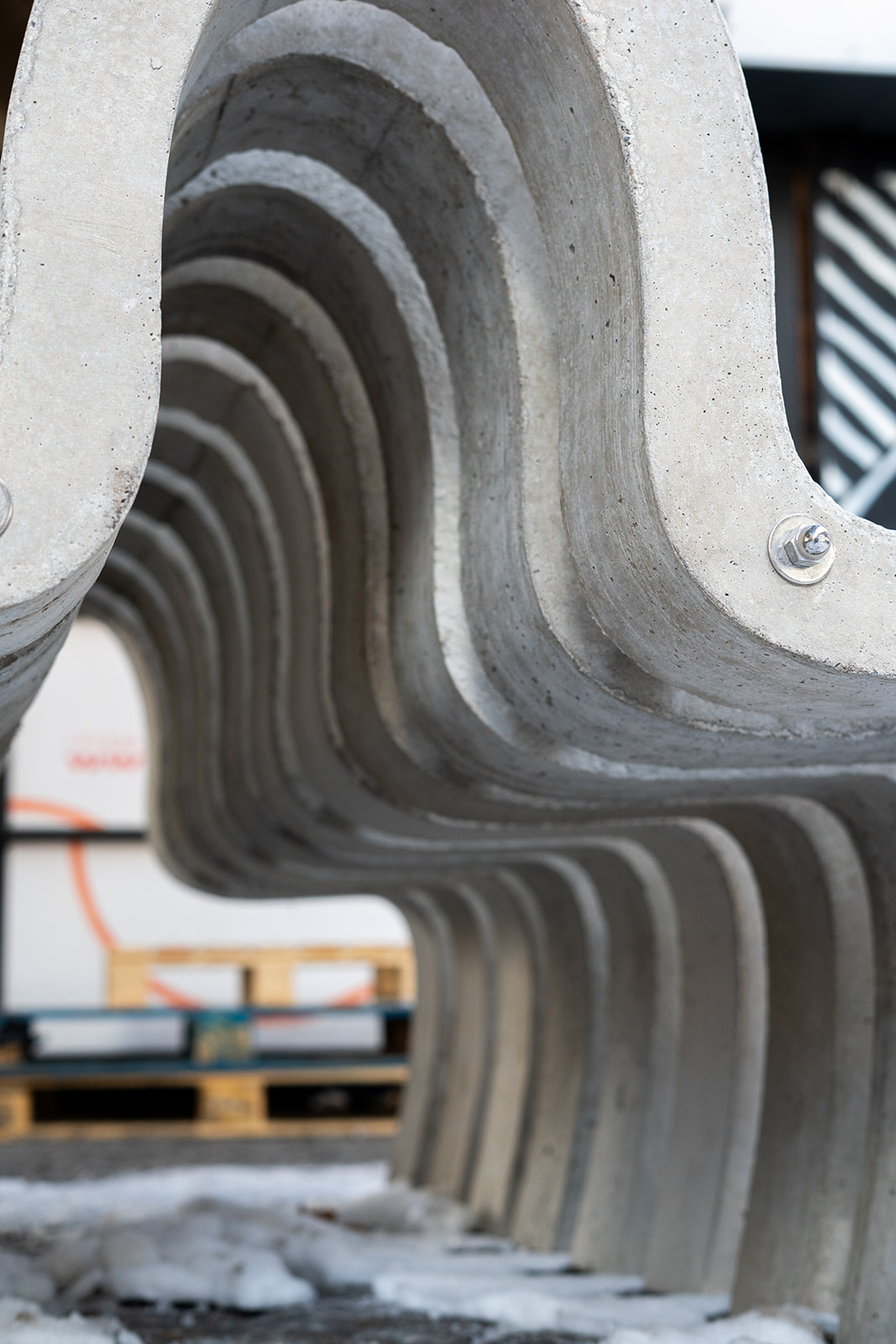
The bench is made from crushed tiles, toilets, porcelain, and other construction waste. In 2025, it was nominated for the Danish Design Award and has just won the Red Dot Award in the design concept category, which will be presented in Singapore on October 15 of this year. Behind the company are three former students—Thor Giessing, Pelle Boas, and Simon Lund—who created the bench as their graduation project. They all studied Entrepreneurship and Design at the Copenhagen Business Academy (EK).
From Broken Toilets to Urban Furniture
The core of this innovation lies precisely in shifting the perception of construction waste from being a byproduct to being a valuable resource. That’s according to Thor Giessing, one of the partners behind KONKRET.
“Our starting point was that we wanted to see if we could promote the use of these secondary resources that come from the construction industry. We wanted to make it the first choice rather than an afterthought, because we’ve reached a point where there are Danish companies producing this recycled concrete in a quality and strength that makes it perfectly suitable for urban structures or artistic installations,” explains Thor Giessing.
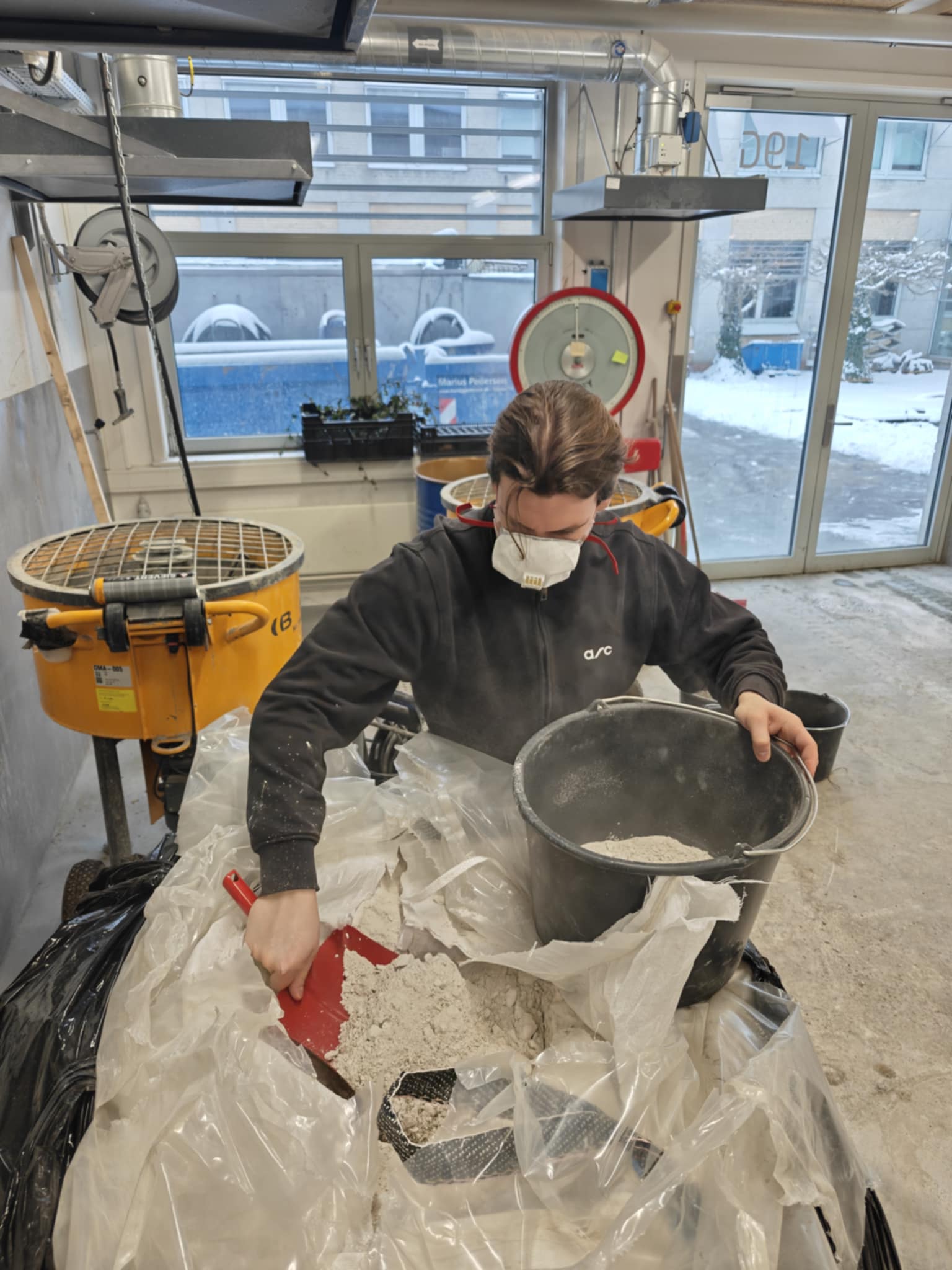
The bench was created in collaboration with the company Recycon Elements, which specializes in collecting construction waste and sorting it into fractions and sizes that match the specific requirements needed. It’s also possible to scan the bench, as it’s equipped with an NFC chip. This allows you to find out exactly what kind of waste material the bench is made of, how much cement was used, and where the waste came from.
“There’s a lot of storytelling in the product and very concrete evidence of the circular economy, because you can see that you’re sitting on old toilets, sinks, or other sanitary waste—right there on a bench in a public space,” explains Thor Giessing.
It’s also possible to go directly from the construction site to urban furniture.
“If you have a pure batch of asbestos cement from roof panels or a large amount of construction waste from a development project in a backyard, you can take the waste you’ve generated yourself and have it converted into our concrete elements,” he explains.
User Testing in Urban Spaces
As students, the biggest challenge in the process has been, above all, a lack of funds. In this regard, their partner, Recycon Elements, has been incredibly helpful during the startup phase and with the initial test castings.
At the same time, it has been a challenge to get in touch with the municipalities to have the bench installed in public spaces. They’ve had a productive dialogue with the Bornholm Regional Municipality and had the bench installed in Allinge during the Folkemødet festival.
“To conduct user tests and showcase the bench in public spaces, it’s been important to set up some test installations in the municipalities. But it has been extremely difficult to gain a foothold with the municipalities. Both because such a purchase typically requires a competitive bidding process, and because it has been difficult to navigate the technical departments. Here, we found a solution by partnering with an organization like Urban 13, which manages a large number of public spaces at Bispebuen in Copenhagen,” says Thor Giessing.
A Beneficial Mentoring Program
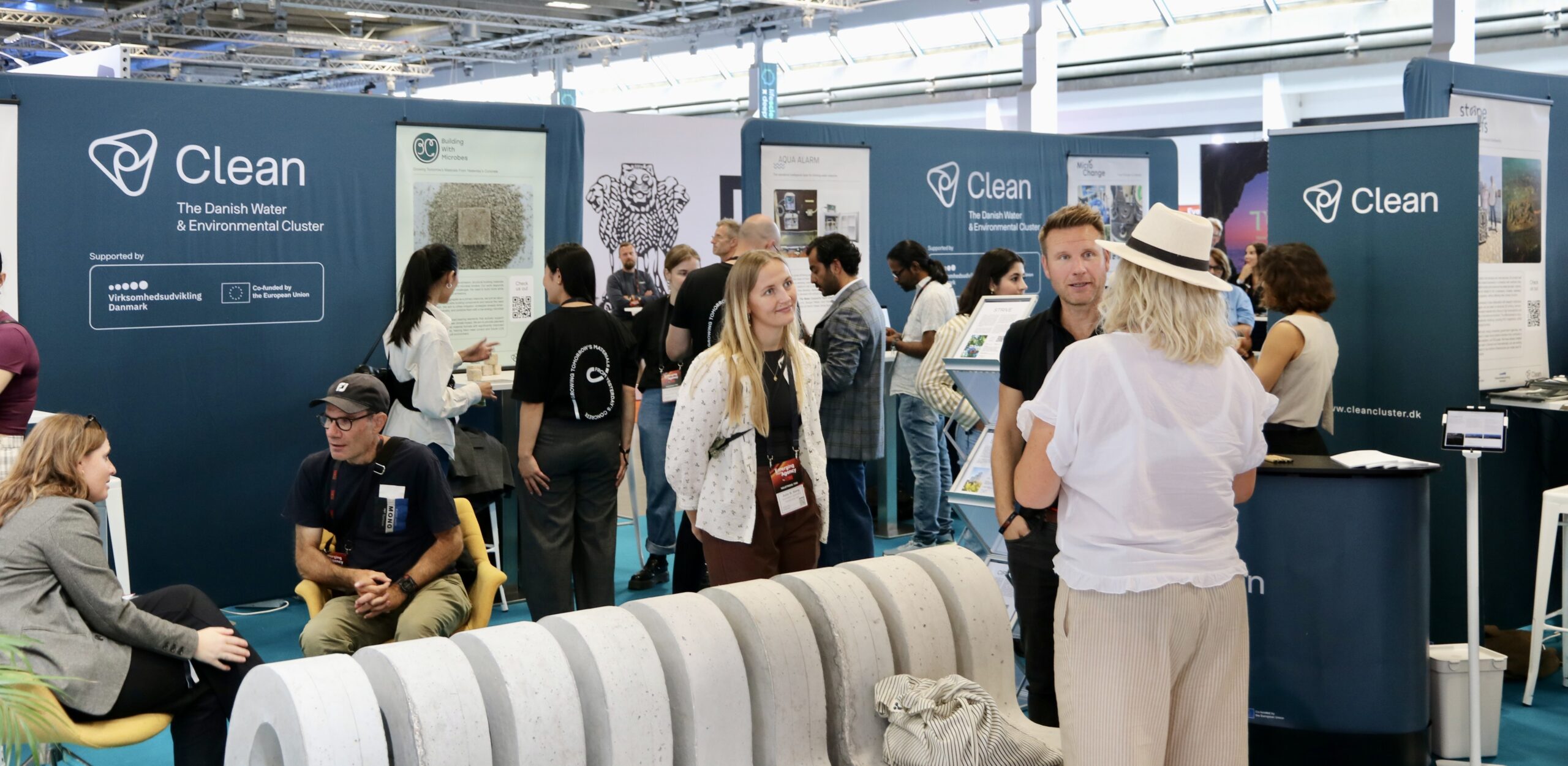
As a new entrepreneur, it can be a challenge to create business plans, think from the customer’s perspective, and figure out the best technical approach to building the product. Through CLEAN, they’ve gained access to mentoring and participated in various initiatives such as the LOOP Forum and TechBBQ. This has provided them with a wealth of valuable insights and contacts.
At the same time, they’ve participated in a mentoring program through Beyond Beta, which helps startups scale their businesses and offers the opportunity to attend camps featuring expert presentations.
“As a new entrepreneur, there are many new things to navigate, and it’s been nice to have someone to lean on when we’ve had to make more complex decisions. This applies to both design and product development, as well as to what we can expect from a business partner and identifying potential customers where we can sell our bench,” says Thor Giessing.
As entrepreneurs on student aid, it’s especially important for them to secure more funding. Right now, they can only produce 1–2 modules out of the 11 modules per day that a standard bench requires. To scale up, they need more molds.
“Our product is 85 percent complete. There are some design elements and details we’d like to incorporate into our molds so that there isn’t as much post-processing required. We’d also like to create a digital product passport, and we need to conduct pressure testing as well as freeze-thaw tests at the concrete laboratory at the Danish Technological Institute. These are some of the activities for which we need to seek funding. For example, we’ve applied for InnoFounder through the Innovation Fund, which could finance an entire year of work.”
“But first and foremost, we’re looking forward to receiving the Red Dot Design Award in Singapore. It’s a great opportunity to see how they’re working with similar concepts in the Asian market,
and we hope, of course, that we can use it to build a network with potential stakeholders, partners, and customers,” he says.
Facts
ARC-RACK was developed by KONKRET Design ApS, which consists of Thor Giessing, Pelle Boas, and Simon Lund. The bench was created as part of a project in Entrepreneurship and Design at the Copenhagen Business Academy (EK).